
Menopause Care & Menopausal Hormone Therapy (MHT) in Westerville, Ohio
Find personalized, evidence-based menopause care from Kristen Loose, CNP, MSCP, a Menopause Society Certified Practitioner. Serving women throughout Westerville, Columbus, and Central Ohio with Menopausal Hormone Therapy (formerly called Hormone Replacement Therapy or HRT), non-hormonal treatment options, and individualized care designed to help you feel like yourself again.

Personalized Menopause Care Designed Around You
Menopause is a natural stage of life, but the transition can look and feel very different for every woman. While the average age of menopause in the United States is approximately 51, perimenopause often begins during the 40s—and symptoms may appear as early as the mid-to-late 30s. Fluctuating hormone levels can cause familiar concerns such as hot flashes and night sweats, along with less-recognized symptoms including brain fog, disrupted sleep, mood changes, anxiety, weight gain, joint and muscle discomfort, vaginal dryness, urinary changes, decreased libido, heart palpitations, and changes in taste or smell.
At Dr. Mantor’s Wrinkle & Weight Solutions, we understand that these symptoms are real and can significantly affect your health, relationships, daily life, and overall well-being. Our personalized, biopsychosocial approach looks beyond hormone levels to understand your complete experience. Based on your symptoms, medical history, lifestyle, and personal goals, your individualized treatment plan may include Menopausal Hormone Therapy (MHT), non-hormonal medications, nutrition and lifestyle support, and other evidence-based therapies to help you feel healthy, confident, and more like yourself again.

what are menopause phases?
Menopause is characterized by the natural cessation of menstrual cycles for a consecutive 12-month period. This phenomenon occurs universally among women as they age and their reproductive hormone levels diminish. Upon the completion of menopause, marked by the absence of periods for an entire year, women lose their ability to conceive.
From birth, a woman's ovaries house all the eggs she will ever possess. These eggs remain stored in the ovaries, with one being released monthly. In the absence of fertilization by male sperm, a menstrual period ensues. The processes of menstruation and ovulation are regulated by the reproductive hormones estrogen and progesterone, which are synthesized by the ovaries. As a woman advances in age, the ovaries gradually reduce their estrogen production until menstruation ceases. In the United States, the average age for natural menopause is 51 years, though it is deemed normal for it to occur anytime after the age of 40.
Some women may experience menopause at a younger age. When menopause manifests before the age of 40, it is classified as premature menopause. Surgical interventions, such as the removal of the ovaries during a hysterectomy, can precipitate this condition. Additional causes include exposure to harmful toxins like chemotherapy, which can impair ovarian function, or specific medical conditions such as premature ovarian failure.
Natural menopause unfolds over several years and comprises three distinct phases:
Perimenopause: This initial phase generally begins several years before the onset of menopause as the ovaries commence producing less estrogen. Perimenopause continues up until menopause, at which point the ovaries cease egg release. During this stage, women may experience menopausal symptoms due to declining estrogen levels. The reduction in estrogen accelerates during the final one to two years of perimenopause, often intensifying menopausal symptoms.
Menopause: A woman is considered to be in menopause when she has not experienced a menstrual period for an entire year. At this juncture, the ovaries have ceased releasing eggs and producing estrogen.
Postmenopause: Following the menopausal phase, a woman enters postmenopause. During this phase, hot flashes and other menopausal symptoms typically subside, and she can no longer conceive. However, her susceptibility to various health conditions may increase as she continues to age.
Potential Benefits of Menopausal Hormone Therapy (MHT)
For many healthy women, Menopausal Hormone Therapy (MHT) is considered the most effective treatment for bothersome menopause symptoms. By replacing hormones that naturally decline during menopause, MHT can help reduce hot flashes, night sweats, and sleep disturbances, while also improving mood, mental clarity, vaginal dryness, and overall quality of life. Many women report feeling more like themselves again as symptoms become more manageable.
Beyond symptom relief, MHT may provide additional health benefits for appropriate candidates. When started at the right time and after a thorough medical evaluation, it may help support bone health, reduce the risk of osteoporosis-related fractures, improve genitourinary symptoms such as vaginal dryness and painful intercourse, and promote healthier aging. Research also suggests that, for many women who begin treatment within the recommended timeframe, the benefits of MHT often outweigh the risks when therapy is individualized and closely monitored.
At Dr. Mantor's Wrinkle & Weight Solutions, Kristen Loose, CNP, MSCP, a Menopause Society Certified Practitioner, takes the time to understand your symptoms, medical history, lifestyle, and personal goals before recommending treatment. Whether your personalized plan includes Menopausal Hormone Therapy (MHT), non-hormonal medications, or lifestyle strategies, our focus is on helping you feel healthier, more comfortable, and confident throughout every stage of menopause.
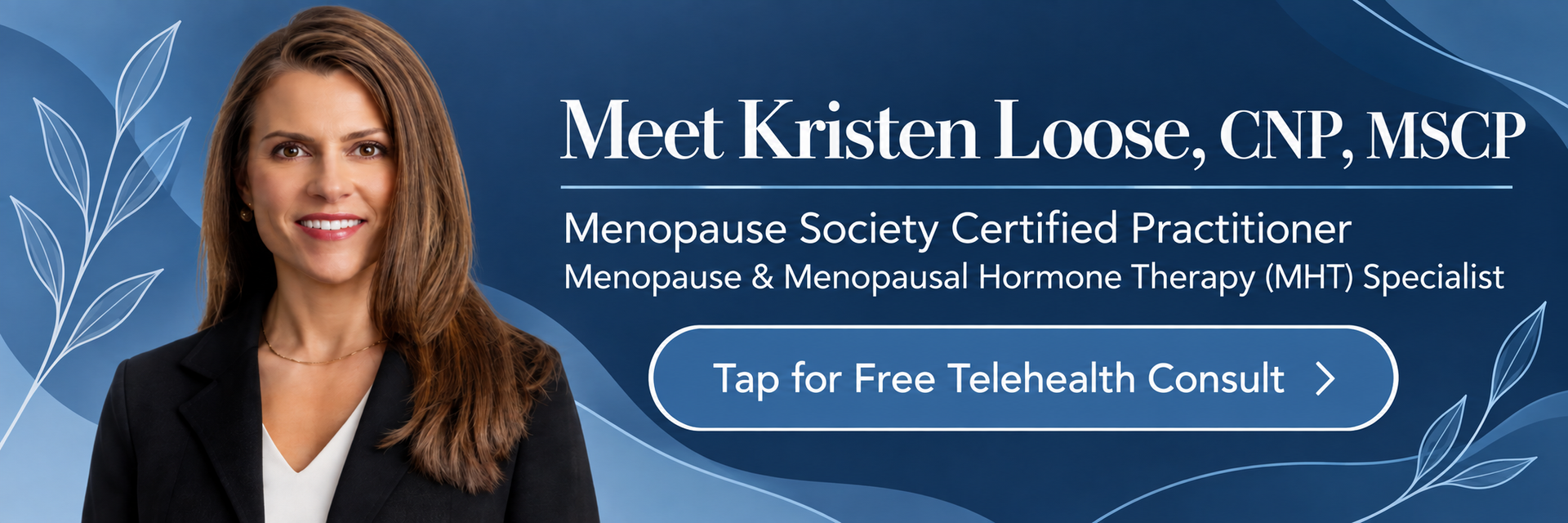
Meet Kristen Loose, CNP, MSCP
Menopause Society Certified Practitioner | Menopause & Menopausal Hormone Therapy
(MHT) Specialist
Kristen Loose, CNP, MSCP, is the dedicated Menopause Specialist at Dr. Mantor's Wrinkle & Weight Solutions in Westerville, Ohio. As a Menopause Society Certified Practitioner (MSCP), she specializes in helping women navigate perimenopause, menopause, and healthy aging through personalized, evidence-based care.
Kristen works closely with each patient to understand how hormonal changes are affecting their overall health, quality of life, and long-term wellness. Whether you're experiencing hot flashes, night sweats, brain fog, sleep disturbances, mood changes, weight gain, low libido, or other menopause-related symptoms, she develops individualized treatment plans designed around your unique needs and goals.
When appropriate, treatment may include Menopausal Hormone Therapy (MHT)—formerly known as Hormone Replacement Therapy (HRT)—along with non-hormonal therapies, lifestyle recommendations, and comprehensive wellness strategies to help you feel like yourself again.
Kristen began her nursing career by earning her Associate Degree in Nursing from West Kentucky Community and Technical College before completing both her Bachelor of Science in Nursing and Master of Science in Nursing at Ohio University, where she specialized as a Family Nurse Practitioner. She is board-certified by the American Association of Nurse Practitioners (AANP) and has completed advanced training to earn the prestigious Menopause Society Certified Practitioner (MSCP) credential, demonstrating specialized expertise in menopause management and women's midlife health.
Known for her compassionate, patient-centered approach, Kristen believes every woman deserves to feel heard, understood, and empowered throughout her menopause journey. She partners with each patient to create a personalized care plan that supports physical health, emotional well-being, and long-term vitality.
Outside the office, Kristen enjoys spending time outdoors, staying active through fitness, and traveling with family and friends.
Kristen sees patients on Wednesdays, Saturdays, and by appointment.
Complimentary initial telehealth menopause consultations are available.

Menopause and Hormone Therapy Frequently Asked Questions
Expert Answers About Menopause, Perimenopause and Menopausal Hormone Therapy (MHT)
What is Menopause Hormone Therapy?
Menopausal Hormone Therapy (MHT) is an evidence-based medical treatment used to help relieve symptoms of perimenopause and menopause by replacing hormones—primarily estrogen, and when appropriate, progesterone—that naturally decline during midlife. You may also know it by its former name, Hormone Replacement Therapy (HRT).
As estrogen levels decrease, many women experience symptoms that can significantly affect their quality of life, including hot flashes, night sweats, poor sleep, brain fog, mood changes, vaginal dryness, painful intercourse, urinary symptoms, joint aches, heart palpitations, and low libido. For many healthy women, Menopausal Hormone Therapy (MHT) can be a safe and effective treatment option when started at the appropriate time and prescribed after a thorough medical evaluation.
Today's MHT is highly personalized. Rather than a one-size-fits-all approach, your treatment plan is tailored to your symptoms, medical history, health goals, and individual risk factors. Depending on your needs, therapy may include estrogen alone, estrogen combined with progesterone, or other evidence-based medications and non-hormonal therapies.
At Dr. Mantor's Wrinkle & Weight Solutions, Kristen Loose, CNP, MSCP, a Menopause Society Certified Practitioner, provides comprehensive menopause evaluations and personalized treatment plans designed to help women navigate perimenopause and menopause with confidence. Whether Menopausal Hormone Therapy (MHT) is appropriate for you or a non-hormonal option is a better fit, our goal is to help you feel healthier, more comfortable, and more like yourself again.
Remember: Every woman is different. The decision to start Menopausal Hormone Therapy (MHT) should always be made in partnership with a qualified healthcare provider after reviewing your symptoms, health history, and personal goals.
What is Menopausal Hormone Therapy (MHT)?
Menopausal Hormone Therapy, formerly called Hormone Replacement Therapy or HRT, uses carefully selected hormones to help manage symptoms associated with perimenopause and menopause. Depending on your needs and medical history, treatment may include estrogen, progesterone, or a combination of therapies. We offer free initial telehealth consultations.
How do I know if hormone therapy is right for me?
The decision to begin hormone therapy should be based on your symptoms, age, health history, personal risk factors, and treatment preferences. Kristen Loose, APRN-CNP, MSCP, will review your complete health history and explain the potential benefits, risks, and alternatives before recommending a personalized plan. We offer free initial telehealth consultations.
Are non-hormonal menopause treatments available?
Yes. Women who cannot or prefer not to use hormone therapy may benefit from non-hormonal prescription medications, nutritional guidance, lifestyle changes, sleep support, vaginal treatments, or other evidence-based options. Your care plan will be tailored to your symptoms, medical needs, and personal preferences. We offer free initial telehealth consultations.
How Does Perimenopause and Menopause Impact Your Mood?
Menopause can have a profound effect on emotional health, often leading to mood fluctuations, irritability, anxiety, and even feelings of depression. The hormonal changes during the phases leading up to and during menopause can cause these emotional variations, making it crucial to recognize the different emotional impacts and ways to manage them.
Typical Emotional Impacts of Menopause:
Mood Fluctuations:
Changing hormone levels can cause abrupt changes in mood, making some women feel irritable, angry, sad, or prone to crying.
Anxiety:
Many women report heightened anxiety during menopause, possibly related to hormonal shifts or the stress of this transitional period.
Depression:
Though not all women will experience it, some may develop symptoms of depression during menopause due to hormonal imbalances or other contributing factors.
Irritability:
A very frequent symptom, irritability may present as increased frustration, short tempers, or difficulty handling stress.
Loss of Confidence and Self-Esteem:
The physical and emotional challenges of menopause can result in self-doubt and diminished confidence.
Cognitive Issues:
Problems with concentration or memory, often referred to as brain fog, are common and can add to feelings of anxiety or frustration.
Decreased Motivation:
Some women might find themselves less motivated or unable to enjoy activities that once brought them pleasure.
Fatigue:
Hormonal changes and sleep disturbances associated with menopause can lead to chronic tiredness, impacting both physical and emotional health.
Learn more by scheduling a free tele-health consultation with our menopause and HRT expert today!
Dr. Mantor's Wrinkle and Weight Solutions, LLC
6982 Worthington Road
Westerville, OH 43082
Since 2008
Can Urinary Tract Infections Become More Common with Menopause?
Urinary tract infections often arise due to the decline in the hormone estrogen that occurs post-menopause. A similar decrease in estrogen happens if you undergo ovarian removal or specific cancer therapies. But why does reduced estrogen lead to UTIs? Estrogen plays a vital role in keeping the tissues in the vagina and urethra flexible and hydrated.
Not intended as medical advice, but for informational and educational purposes only.
How Can Your Sexual Health Impacted with Perimenopause and Menopause?
Understanding and maintaining sexual health is a vital aspect of one's overall sense of self and well-being. However, it is essential to recognize that there is no universal standard when it comes to sexual activity and desire. Some individuals experience a significant decrease in desire as they reach midlife, while others may see an increase in interest, and yet others may notice no change whatsoever. Only you and your partner can determine whether your sexual life aligns with your needs and desires.
Issues in Sexual Function.
Sexual dysfunction can significantly disrupt one's life. There are four main areas where these issues can arise: sexual desire, arousal, orgasm, and sexual pain. These problems often overlap; for instance, someone who has a low level of sexual desire might also encounter difficulties with arousal or achieving orgasm.
Sexual desire: The reduction in estrogen production during menopause can lead to hot flashes and night sweats, which can disturb sleep and, consequently, reduce sexual interest. Lowered estrogen levels can also cause vaginal dryness and thinning of the vaginal lining, making penetrative sex uncomfortable or painful.
Hormonal changes: These are merely one part of a complex set of factors that affect sexual activity during midlife and beyond. Social changes such as altering partnerships (due to divorce or dating), children moving out or returning home, and the responsibility of caring for aging or ill parents frequently occur during this period.
Partner's sexual issues: These can also impact desire. Changes in body image, self-esteem, and concerns about aging are significant factors. The level of sexual interest post-menopause is often influenced by one’s past levels of sexual interest.
Medical conditions: Various health problems can result in low sexual desire. Additionally, some medications, especially those used to treat depression, can interfere with sexual function.
Challenges in Sexual Health.
In addition to issues with sexual desire, women may face three other main categories of sexual problems:
Difficulty with arousal: Some women may find themselves unable to achieve or maintain genital arousal.
Difficulty with orgasm: Whether this issue is a new development or a lifelong concern, some women may struggle to reach orgasm.
Sexual pain: Pain during sex can stem from multiple causes. Vaginal dryness can be alleviated with the use of lubricants and vaginal moisturizers to maintain moisture and reduce friction. Low-dose vaginal estrogen therapy (ET) is another potential solution.
Seeking Professional Assistance.
Understanding these factors and communicating sexual concerns with a healthcare professional can enhance desire and overall sexual satisfaction. A professional evaluation can identify underlying medical or psychological causes of low sexual desire. Though many individuals find it challenging to discuss sexual problems, healthcare professionals are valuable resources in achieving optimal sexual health. Counseling can aid in managing difficult medical, relationship, or family issues contributing to sexual health concerns. Healthcare professionals can also refer you to specialists who focus on treating sexual concerns.
By exploring and addressing these aspects, one can work towards a fulfilling and satisfying sexual life, ensuring that their needs and those of their partner are met in a healthy and balanced manner.
Not intended as medical advice, but for informational and educational purposes only.
Is there any supplement or natural remedy for perimenopause symptoms?
This can be a difficult question to answer because I am not sure exactly what symptoms that you are trying to manage. Supplements typically only address one symptom at a time. There are some supplements that have shown benefit for some symptoms, but not for others.
As for vasomotor symptoms, or hot flashes and night sweats, The Menopause Society included a section in the 2023 Nonhormonal Position statement on dietary supplements for the treatment of these symptoms and listed whether they recommended the use of it or not. For two of the most common supplements, soy and black cohosh, the answer was no, The Menopause Society does not recommend either. The reason was that they could not find consistent strong evidence in the studies they looked at that it actually helped hot flashes more than placebo. Additionally, they did not recommend black cohosh because they found some studies that showed it increased risk for liver disease.
As for other common perimenopause symptoms, there is evidence that some supplements may help other specific symptoms, for example difficulty sleeping.
The main thing to remember with supplements, is that generally, each supplement only addresses one particular symptom. It is also important to remember that supplements do not replace depleted hormone levels, so you won't get the same broad benefits and symptom relief from one supplement that you might from hormone therapy.
This is not intended for medical advice, but informational and educational purposes only.
What is the best way to address vaginal dryness? I prefer to avoid chemicals, but the natural lubricants available at stores are irritating.
This is a very common issue for women in perimenopause and menopause, and is actually one of those symptoms that gets worse as women progress through their menopause journey. One of the main reasons that lubricants can be so irritating to vulvar and vaginal tissue is that they further dry the tissue and pull moisture out of the tissue rather than add moisture to it, even the lubricants that are labeled "natural". The World Health Organization, WHO, actually has standards for vaginal lubricants to avoid this problem, but many lubricants on the market don't meet these criteria. WHO standards for vaginal lubricants include that the it should have a pH (acidity level) of 4.5 which matches the normal pH of the vagina, and an osmolality of 1200 mOsm/kg (a measure of concentration), but most lubricants on the market have an osmolality and a pH that are both much higher and subsequently pull moisture out of the tissue causing further dryness and irritation.
Here are a few that meet WHO standards:
Water Based Lubricants:
Good Clean Love;
Yes Baby Vaginal Friendly Lubricant
Yes Water Based Intimate Lubricant.
Silicone Based lubricants (may contain small amounts of Vitamin E or coconut oil):
Astroglide X (silicone only)
Astroglide X Silicone gel (silicone and coconut oil)
Uber Lube (silicone and vitamin E)
Vaginal Moisturizers:
Moist Again (water based)
Yes Vaginal Moisturizer (water based)
If you want a completely plant based, natural product, pure coconut oil is very soothing to a lot of women.
Hopefully, you will find one of these products helpful and suitable to your body.
If after a few weeks you don't get any relief, you should see your gynecologist for an exam to make sure there is nothing else causing the irritation.
Not intended as medical advice, but for informational and educational purposes only.
Do you have any advice as far as nutritional or food supplements that can help with getting and staying asleep at night? I started menopause this February after an Oophorectomy/hysterectomy and have struggled massively to get sleep.
 Button
Surgical menopause (removal of the ovaries) can cause a sudden drop in hormones including progesterone, estrogen, and testosterone. This can make typical perimenopause and menopause worse for a lot of women. Sleep is profoundly affected for many women.
Since you asked specifically for supplements or nutritional or food supplements, I will start there. Nutrition, you want to make sure to follow a generally healthy diet, there is a lot of debate about what that really means, but broadly speaking, Mediterranean diet has been shown to be one of the healthier diets you can follow. Avoid alcohol, especially before bed, which even though it is a sedative, can actually make sleep much worse, and avoid eating 3 hours before bed.
As far as supplements go, there are several that may be helpful: melatonin, magnesium threonate, ashwaganda, and L-theanine have been shown to help decrease sleep latency (how long it takes to fall asleep). There are several things to remember with supplements: these are not regulated and there has been shown to be wide product variability--one study showed up to 465% difference in what the bottle contained of the same supplement, so it is strongly recommended to get a product that is third-party tested to try to ensure product quality. You should check with your pharmacist or prescribing doctor or provider that the supplements are safe to take with any prescriptions or other medications. You should also keep in mind these supplements do not usually work right away, you have to give them at least a few weeks-sometimes up to 8-12 weeks for them to work, especially things like ashwaganda and L-theanine. If you are struggling with anxious thoughts which is very common after a hysterectomy & oophorectomy, you might consider CBT-i which is Cognitive Behavioral Therapy for insomnia and is considered a first line treatment for insomnia recommended by the American Academy of Sleep Medicine (AASM) especially for insomnia related to anxiety.
You didn't mention if you were on Hormone Therapy (HT) or not, but if you are a candidate, you might want to talk to your doctor about trying micronized progesterone. This can be profoundly helpful for women who can't sleep due to a loss of hormones, even if you don't have a uterus. Progesterone works on gaba receptors, very simply put it stimulates the "rest and digest" part of the nervous system versus "fight or flight" which can really help some women sleep. So talk to your provider.
I hope that helps! Thank you for your question.
This is not intended for medical advice, but for educational and informational purposes only.
Why do I get more vaginal infections during perimenopause?
ButtonAs we lose estrogen, vaginal pH changes which decreases the amount of lactobacilli (good vaginal bacteria) and gives rise to more infectious vaginal bacteria like gardnerella (a common organism that causes bacterial vaginosis). Topical vaginal estrogen can often correct the acidity level and subsequently correct the vaginal microbiome and drastically reduce the number of infections you’re getting. Vaginal estrogen is very very safe to use, but it is still a prescription medication in the U.S. so talk to your doctor or other healthcare provider or menopause specialist about the treatment that is right for you.
This is intended for educational and informational purposes only and is not medical advice.
Dr. Mantor's Wrinkle and Weight Solutions, LLC
6982 Worthington Road
Westerville, OH 43082
614.891.2000
Since 2008
D
I am STRUGGLING with the weight gain, mostly in the gut area! I’m so mislead by allll the stuff out there in social media and now my whole feed is filled with weight loss supplements etc and I’m so lost. But I swear I’ve gained so much and I hate it!
ButtonUGH! You are not alone and this is one of THE most common and one of THE most frustrating symptoms I hear.
This one can be so so hard, because it is usually multifactorial and can be VERY complex.
You mentioned that your whole feed is filled with supplements and that you are lost. You are not alone!
I like to remind people that supplements are just that, they are supplemental. It is not the main thing.
1) SLEEP!! this one is so underrated. So much gets out of whack when we don't sleep--including hunger and satiety hormones and energy expenditure goes down because NEAT (non-exercise activity thermogenesis) decreases. 2) Stress reduction. 3) I am going to say diet and exercise because we really can't get away from that 1) Follow a diet high in protein and fiber those foods tend to be more satiating, 2) exercise-start with something you can be consistent with even if that's only 5 minutes per day, if you can be consistent with it that will have more health benefits for you in the long run than doing a "perfect" workout for a month then burning out. If you can be consistent with it, 2 hours per week of lifting weights has shown to improve body composition/improve muscle mass among many other health benefits.
It also might be time to discuss this with someone who specializes in weight loss. Our registered dietician Danielle and Dr Mantor are an amazing team who can help you with this. Hormone therapy might be something that may help you also. If you have more specific questions about this email me at kristenwithdrmantor@gmail.com
Not intended as medical advice, but informational and educational purposes only.
Should I be worried about gaining weight if I go on hormone therapy (HRT)?
ButtonWhile HRT or HT can cause a little bit of weight gain it is usually only a few pounds and often related to bloating/water retention.
However, in a new study that has been published in the October issue of Maturitas the researchers reported that MHT counteracts the tendency to age-related weight gain. This study showed significantly less weight gain in the MHT Group compared with the Placebo group after 3-5 years and there were about 2800 women in this study so it was not a small study.
I know starting HT can be a big decision and a lot of women have different hesitations for different reasons, and it might not be for everyone, but if you're having other terrible symptoms, it just might be time to give it a try and see how your body responds to it.
Have more questions? Please email us at kristenwithdrmantor@gmail.com
Not intended as medical advice, but informational and educational purposes only.
Dr. Mantor's Wrinkle and Weight Solutions, LLC
6982 Worthington Road
Westerville, OH 43082
614.891.2000
WrinkleandWeight.com
Since 2008
#meopausecare #perimenopause #hrt
Did You Know PCOS is Often Misdiagnosed??
ButtonPCOS, Polycystic Ovarian Syndrome, is a Hormonal Condition That Can Cause Irregular Periods, Excessive Hair Growth, Weight Gain, Acne, Infertility, Dark Skin Patches and
Sleep roblems.
Did You Know Perimenopause and Menopause Symptoms Can Start in Your Mid 30s?
ButtonIndeed, perimenopause can commence in your mid-30s. This transitional phase leading to menopause occurs when the ovaries begin to produce fewer hormones. The onset of perimenopause can range from the mid-30s to the mid-50s. It is a natural process that may bring about various physical and emotional symptoms, such as irregular or unpredictable menstrual cycles, hot flashes and night sweats, vaginal dryness, sleep disturbances, breast tenderness and even odd symtoms, like itchy ears...
Dr. Mantor's Wrinkle and Weight Solutions, LLC
6982 Worthington Road
Westerville, OH 43082
Since 2008.
Complimentary Intial Consultations.